Old City Neighborhood Guide, Block by Block
Old City packs colonial brick, a bridge overhead and a monthly gallery crawl into a few walkable blocks, and it rewards people who slow down.
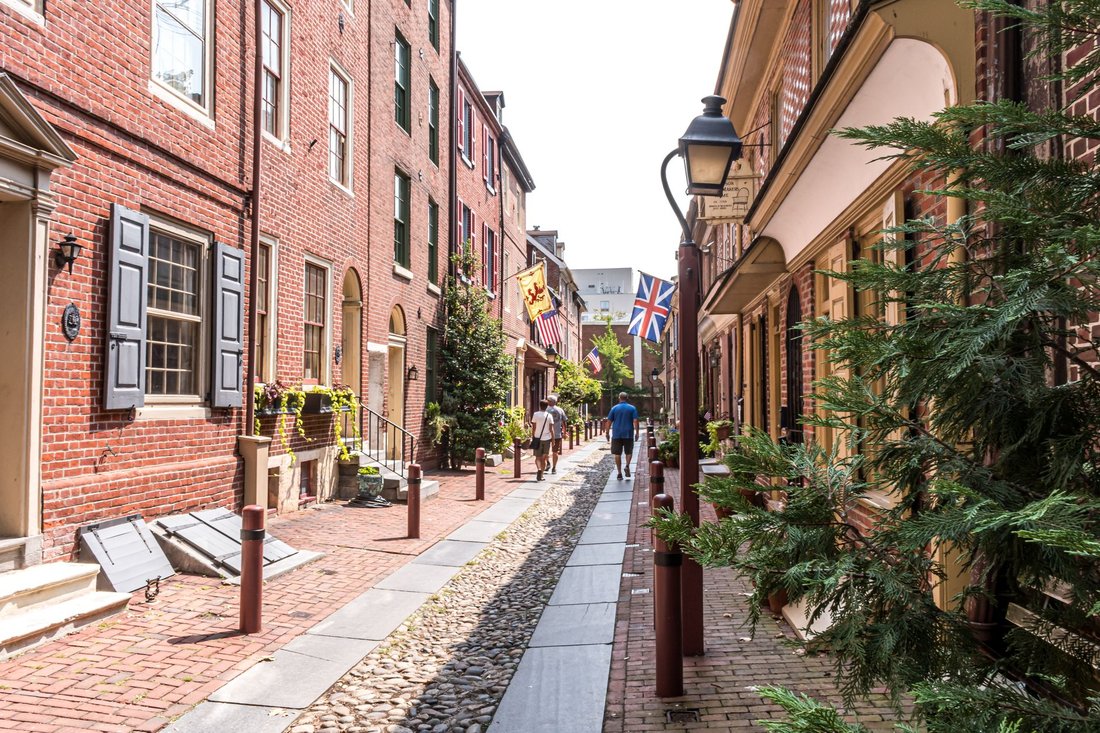
Stand on a cobblestone stretch of Old City on a damp morning and the Benjamin Franklin Bridge hums over your head like a refrigerator the size of a skyline. Colonial brick leans in from both sides, the stones are slick and uneven, and a delivery truck is trying to thread a street that was laid out for horses. This old city neighborhood guide starts there, with the noise and the age sharing a block, because that collision is the whole neighborhood.
Old City sits between Independence Hall and the Delaware River, a few dozen blocks of Georgian and Federal brick that Philadelphia never quite managed to tear down. Plenty of cities keep one preserved street for the tourists. Here the old buildings are still doing jobs. Galleries, design shops and restaurants occupy rooms, with apartments upstairs, that were built for merchants.
How to use this old city neighborhood guide
Think of Old City as a grid with three personalities stacked on top of each other: the historic district to the west, the gallery and shopping streets in the middle, and the nightlife strip pressed toward the river. Walk it west to east and you get the full arc in about an hour. Walk it badly, zigzagging with a phone out, and you will miss the best parts.
Arch Street and Market Street carry most of the traffic. The numbered streets run north to south, and the smaller east-west streets between them, many of them narrow and some of them still cobbled, are where the neighborhood gets interesting. If you are on the el, the Market-Frankford Line, get off at Second Street and you are already in the thick of it. Fifth Street puts you closer to the historic sites.
The Historic Core, Without the Tour-Bus Feeling
The Independence National Historical Park area borders Old City on the west, and yes, it deserves your time. Independence Hall is the real thing. But the neighborhood's better history lessons are the ones nobody has put a rope around.
Elfreth's Alley, a short lane off Second Street, is the oldest continuously inhabited residential street in the country. People live there now. Their windows have flower boxes and their doors have house numbers, so keep your voice down and your camera polite. The alley takes about ten minutes to walk and longer to absorb, because the scale of it is so small. The houses are narrow and close together, and the scale feels human.
Christ Church and its burial ground, near Fifth and Arch, are another quiet stop. Franklin is buried there, and visitors have long tossed pennies onto the grave for luck. It is a strange, tender ritual to watch happen in the middle of a work-day crowd.
Where the Bridge Fits In
The Franklin Bridge is easy to ignore until you notice it everywhere. Its cables frame the sky at the eastern end of the neighborhood, its traffic provides the low rumble under every conversation, and its shadow falls across the streets nearest the water. Locals stop hearing it. Visitors keep looking up. Both reactions are correct.
Galleries, Shops and the First Friday Question
Old City is where First Friday began, the monthly open-gallery evening that turned the neighborhood into a street party for art. It has changed shape over the years, and longtime residents will argue about whether it is better or worse than it used to be. They will also go anyway.
On a First Friday, galleries open their doors and the sidewalks fill, which is exactly why some people avoid it. If you want to look at art rather than shoulders, visit on an ordinary weekday afternoon, when the gallery staff have time to talk and the rooms are quiet. If you want the scene, go on the first Friday evening and treat the crowd as part of the show. Check current gallery listings before you head out, since schedules shift.
Between the galleries you will find independent design and gift shops, plus the kind of vintage and home-goods stores that reward slow browsing. Chains are rare here, and the neighborhood is better for it.
Eating and Drinking by the Block
Old City food runs from casual counters to long, candlelit dinners. This is not the place to chase the definitive cheesesteak, and anyone who tells you otherwise is selling something. Whiz or provolone is a debate for South Philly and other parts of town. What Old City does well is the sit-down meal after a long walk, the cocktail in a brick-walled room, and the coffee you drink standing up while the bridge rumbles overhead.
Roast pork Italian, which many locals quietly rank above the cheesesteak, is worth seeking out wherever you land in the city. For a bigger picture of where to put your appetite, see our rundown of where to eat across all the neighborhoods. Some restaurants in town are BYOB, so confirm the policy before you carry a bottle through the cobblestones.
- For daytime, lean on cafes and bakeries near the shopping streets.
- For evenings, the blocks closer to the river get louder and later.
On an Eagles Sunday in the fall, the bars here fill with green, and the neighborhood loses any pretense of being a museum. That is the correct outcome. Old City has always been a place where people live and argue and eat, and a football game is an honest way to do all of it.
Getting Around and Getting Out
The neighborhood is small enough to cover on foot, and the cobblestones punish bad shoes. Wear something sturdy. Parking is tight and the one-way streets can feel like a puzzle, so the el or a short walk from Center City is the smarter choice.
From Old City, the Delaware riverfront is a short walk east, where the waterfront trail gives you a wide view of the river and the bridge from a different angle. In the other direction, the rest of Center City is a straight walk west. If you are building a longer trip, our guide to more to do in the city picks up where this one stops.
The Takeaway
Go early and go on foot, and spend one visit without a plan. Walk a block you have no reason to walk, look up at the brick and the cables, and listen to the bridge. Old City rewards people who slow down enough to notice that the oldest things here are still in use. Then come back on a first Friday, or an Eagles Sunday, and see what a neighborhood looks like when it is fully switched on.